
Published on 24 September 2026 · 5 min read
Is a cash register mandatory in Switzerland? What the law says
 TiagoFounder and developer of LaKaisse
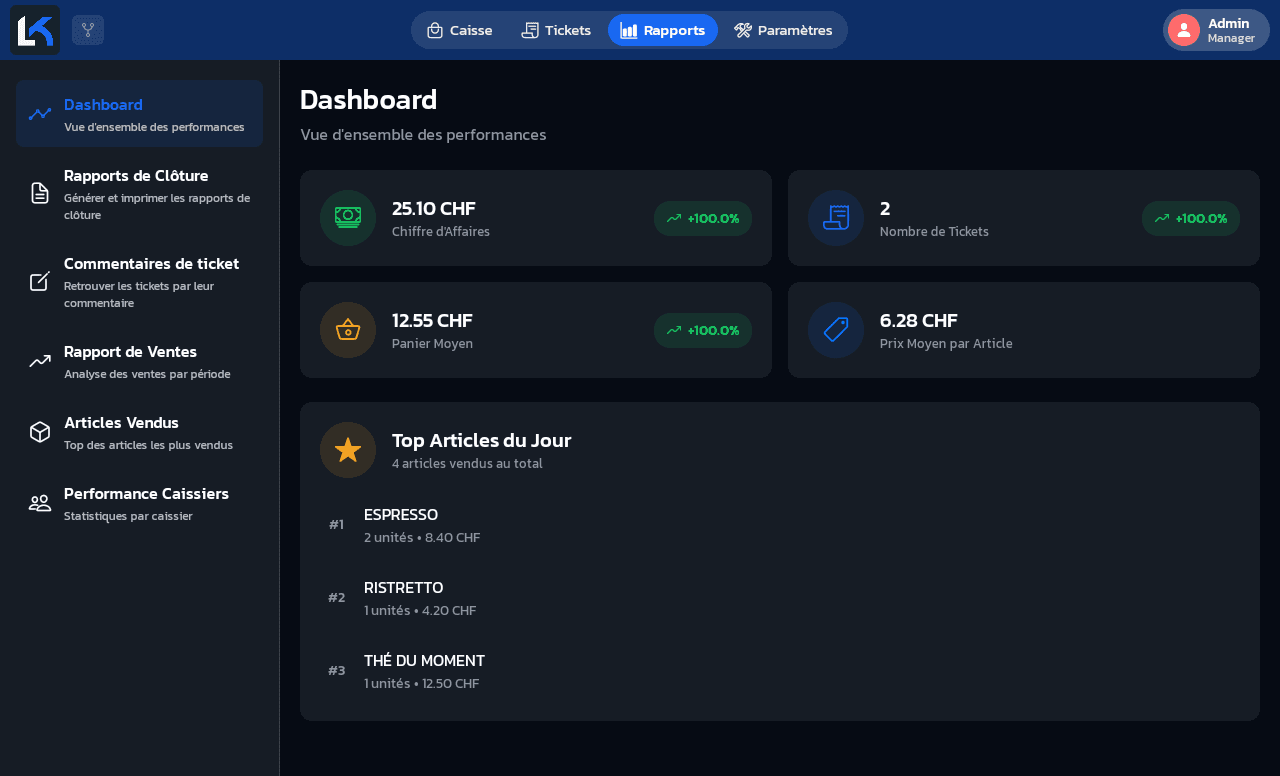
It is one of the first questions asked by retailers and restaurateurs starting out: is a cash register mandatory in Switzerland? The short answer: no, there is no general obligation to use an approved device. But that does not mean you can take payments without recording anything.
Your obligations at a glance
| What the rule says | With LaKaisse | |
|---|---|---|
| Certified register | Not required in Switzerland | No certification to buy or renew |
| Recording takings | Mandatory, cash included (Code of Obligations) | Every sale time-stamped in the journal |
| Keeping records | Ten years | Sales journal kept for ten years |
| Changes | Any change must be detectable | Tamper-proof sales journal |
| VAT | From CHF 100,000 in revenue, justified per rate | Automatic multi-rate calculation, dine-in and takeaway |
No certified cash register required, unlike neighboring countries
In France, Germany, Austria and Italy, businesses must use a cash register that meets specific standards (certification, daily closings, data signing). Switzerland has no equivalent regime: no federal law imposes a brand, a certification or a type of equipment for taking payments.
What is mandatory: keeping proper accounts
The Swiss Code of Obligations (CO) requires you to keep accounting books and retain supporting documents. Your takings, including cash sales, must be recorded completely, accurately and in a verifiable way. Without a suitable tool, that is hard to demonstrate during an audit.
- Small sole proprietorships and partnerships below a certain turnover may limit themselves to simplified accounting (income, expenses, assets).
- Books and supporting documents must be kept for ten years.
- Electronic records must not be modifiable without the change being detectable.
VAT: what your obligation depends on
If your turnover exceeds the VAT registration threshold (CHF 100,000 as a general rule), you must charge VAT, account for it and be able to justify it by rate. A restaurant, for example, applies different rates depending on whether food is eaten on site or taken away. A cash register that handles several rates and produces the matching reports saves you from rebuilding everything by hand.
So why get a cash register?
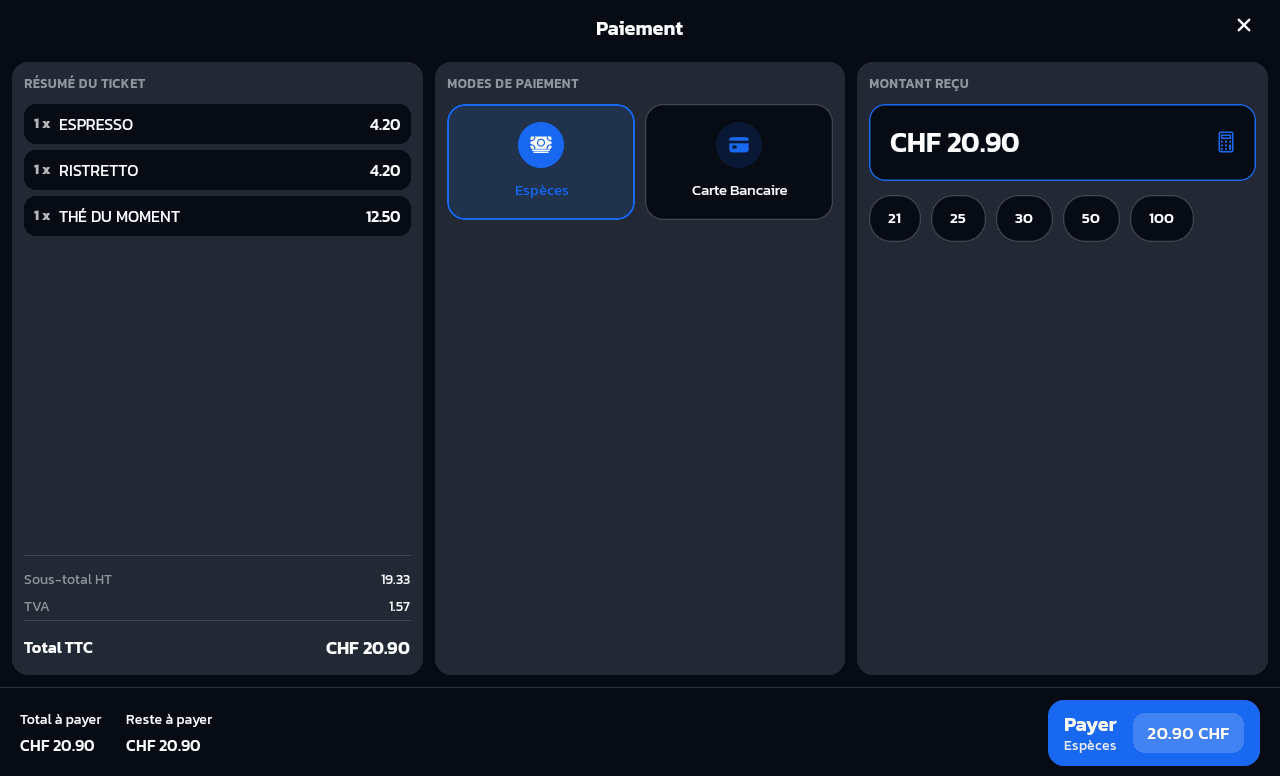
Even without a formal obligation, a cash register makes meeting these requirements much simpler and safer. The concrete benefits:
- a complete, timestamped sales journal that cannot be altered after the fact
- automatic VAT calculation by rate, ready for your VAT return
- daily and monthly reports for your accountant
- fewer risks of errors or disputes during an audit
LaKaisse covers these needs: multi-rate Swiss VAT calculation, a tamper-proof sales journal kept for ten years, and receipts with the necessary details. You can see the full feature list and the lifetime license price on our dedicated pages.
This article provides general guidance and does not constitute legal or tax advice. The rules depend on your legal form and your situation: check them with your accountant or the Federal Tax Administration (FTA).
Keep reading